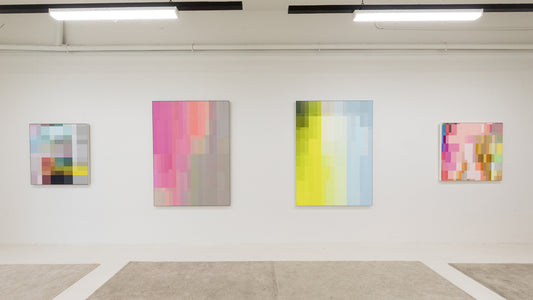
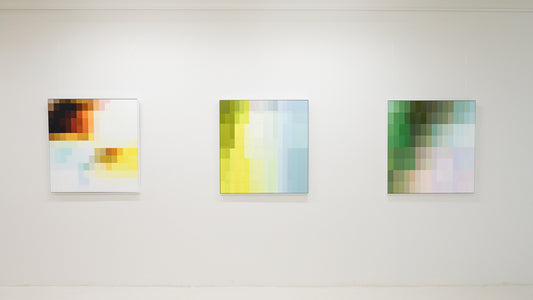
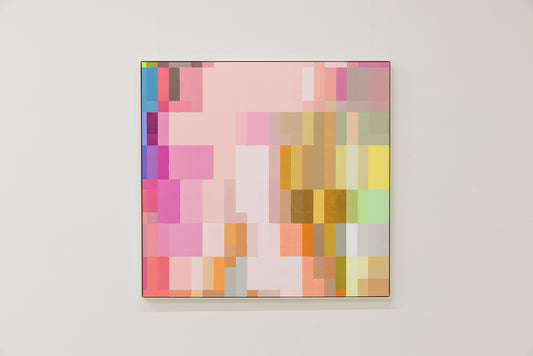
For more than fifteen years, Sue Beyer has occupied a unique position within contemporary Australian art by navigating the intersection of painting, computational language and conceptual practice. But long before completing her MFA which examined art through digital technology, and decades before the smartphone became an extension of everyday life, Beyer was captivated by the mysterious logic of early-generation computers, programming languages and computational code.
What began as youthful curiosity has evolved into an enduring artistic enquiry: not simply how digital systems operate, but how they inform the way we think, communicate and ultimately understand ourselves. Artifact is the latest manifestation of this investigation, asking profound existential questions about what it means to be human in an increasingly digitised world.
The series pivots on the duality of its title. An artifact is understood by most to be an object shaped by humans that expresses an element of a culture. Yet in computing language, an artifact is the term used to describe what is perhaps more commonly referred to as a ‘glitch’, an unintended error in a digital image caused by a processing fault.
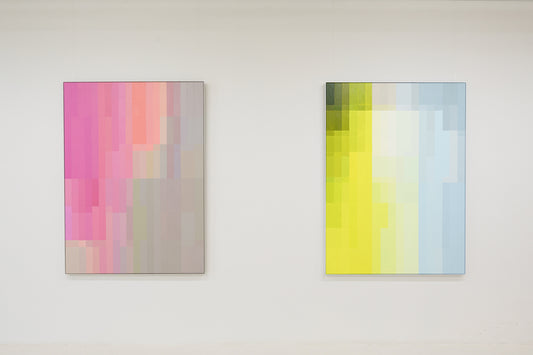
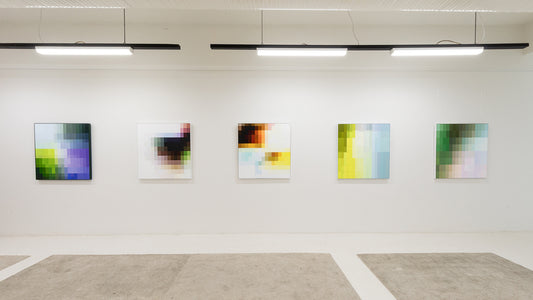
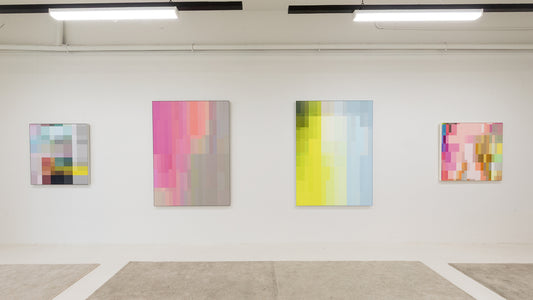
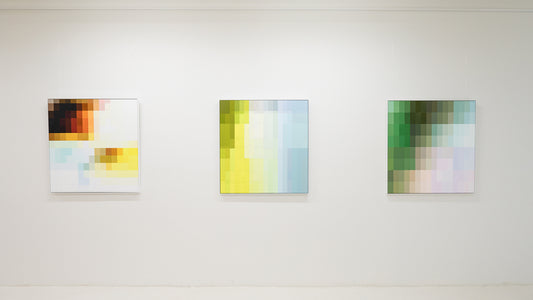
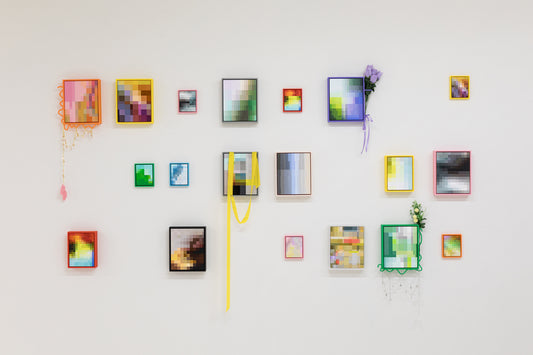
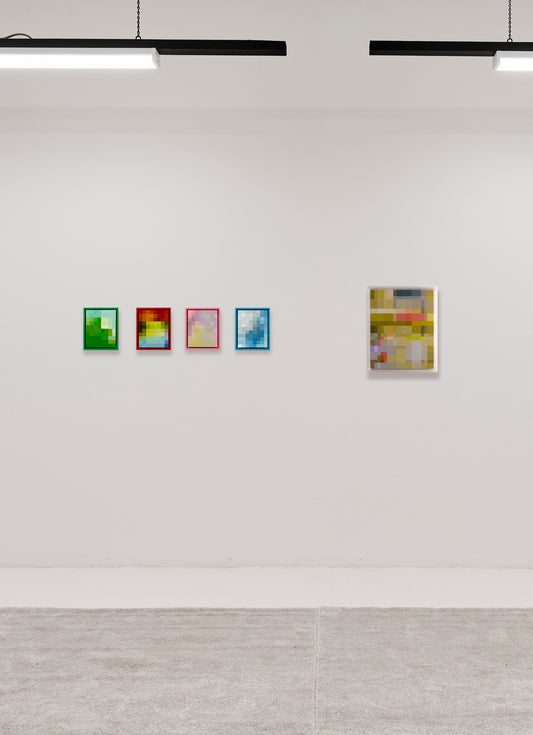
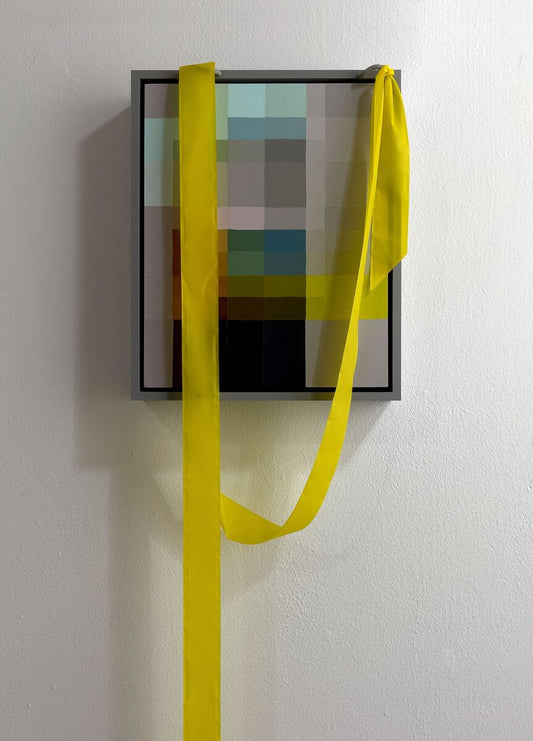
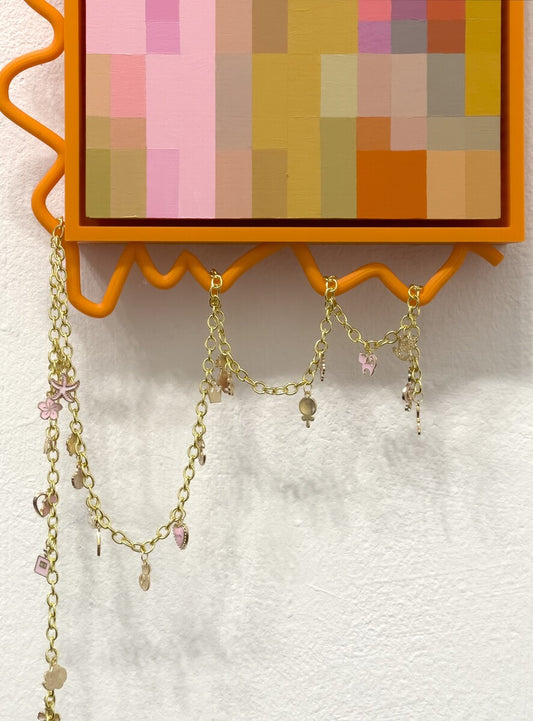
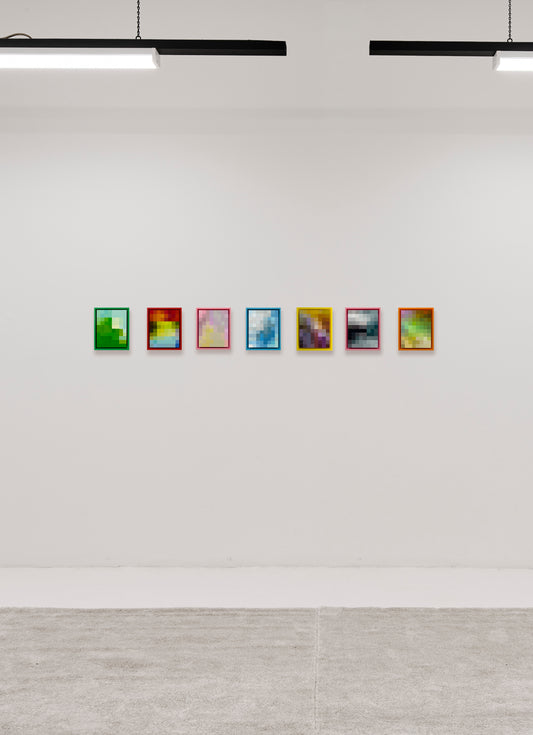
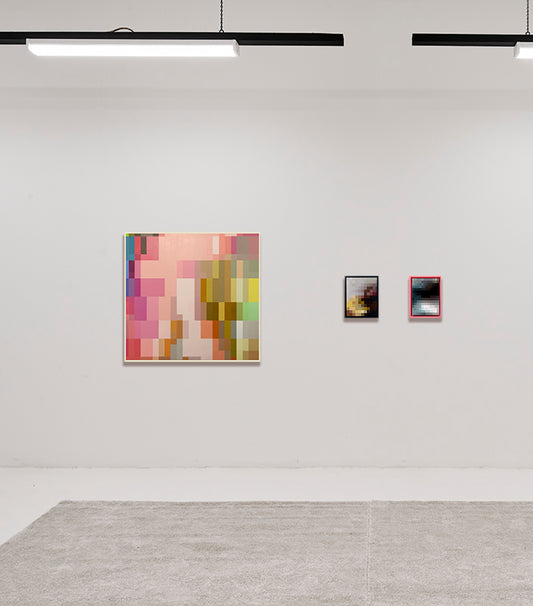
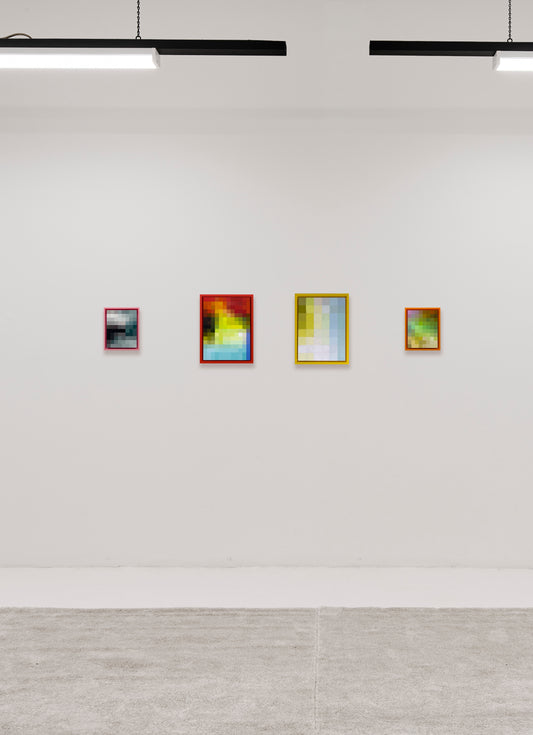
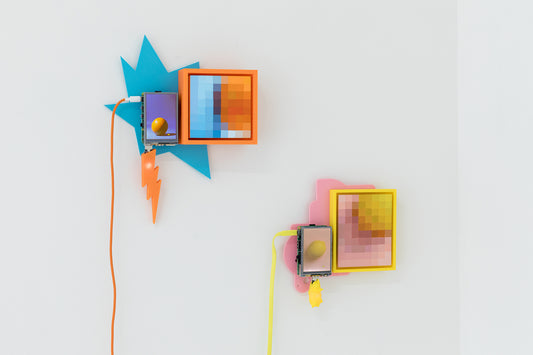
In this new series, Beyer considers the tension between these two definitions, producing artworks that are informed by the digital glitch, while considering their position as objects that embody culture. They shift in the space between the handmade and the algorithmic, not entirely one or the other, but containing elements of both. Screen pixels become painterly gestures, and hand-painted geometries mimic digital errors. Chance and creative decisions play alongside mathematical code and computational logic. This oscillation lies at the heart of the artist’s thinking.
Beyer’s surfaces often appear mechanically precise from a distance, but upon closer inspection, the texture, brushstroke and edge imperfections become evident. Colour is applied carefully, but not flawlessly by hand. These gentle blemishes are quiet, joyful affirmations of artistic agency and creative authenticity.
Ultimately, Artifact is less concerned with technology itself than the impact of living within an increasingly digital culture. Beyer's pixelated paintings, distorted images and hybrid objects function as contemporary artifacts, not yet preserved within the archives of history, but as evidence that the playfulness of human endeavour can never be replicated by systems alone.



 SOLD
SOLD
 SOLD
SOLD